
On the CIRE, derivatives is Element 8: six questions out of 110, every outcome tagged Remember, about two evenings of work. Define a call. Define a swap. Move on.
Then someone adds derivatives to your book, and you meet the other exam.
Same subject. 120 questions, three hours, and a syllabus where not one of the 64 learning outcomes asks you to recall anything. CIRO stopped asking what a call option is and started asking what you would do with one.
Quick facts: 120 questions, 3 hours, $475 first attempt and $300 per retake. Requires the CIRE first. Eight elements, four of which carry 90 of the 120 questions. No mandatory courses — CIRO publishes the syllabus, a study guide and a practice exam for free.
Who Actually Needs This Exam
Three people tend to arrive here. The retail advisor whose book has grown into covered calls. The institutional rep whose desk started clearing swaps. And the Investment Representative who has been executing option orders for six years under a licence that just got renamed.
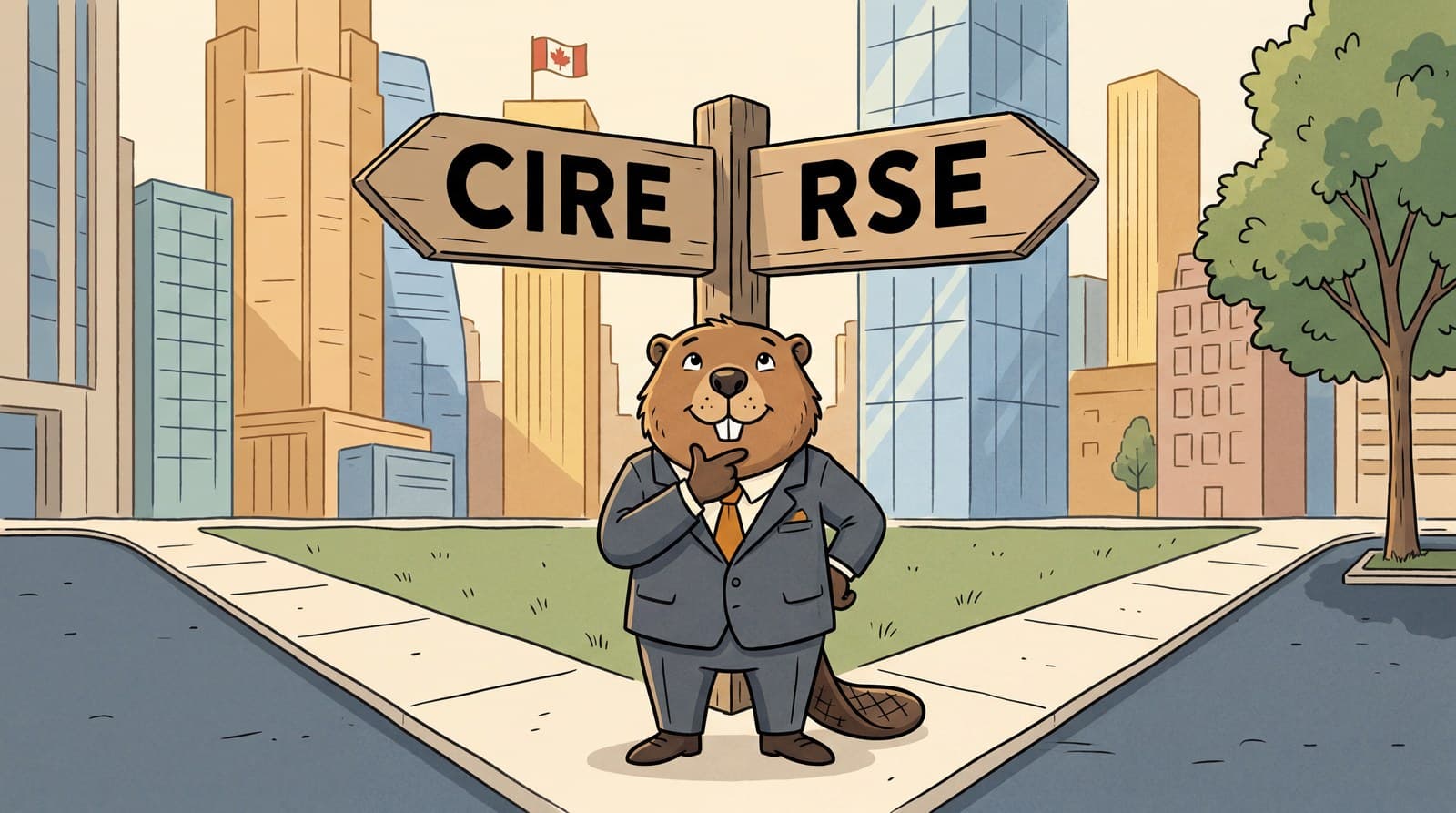
The retail and institutional paths split after the CIRE — RSE one way, ISE the other. The Derivatives Exam bolts onto whichever of those two you are already on, the moment your role touches options, futures, forwards, swaps or CFDs. It is a second licence on the same branch.
At $475 a sitting, the retail-plus-derivatives route is $1,425 in exam fees before tax. (The full price list for all nine exams is in our CIRO exam fees breakdown, and if you're still working out which exams your role needs, start with Which CIRO Exam Do I Need?)
If you were already approved for options or futures
Read this one twice. It has a trapdoor in it.
CIRO collapsed three old product proficiencies — options, futures contracts, and futures contract options — into one derivatives category with one exam behind it. If you were approved before 1 January 2026 for only one side, you keep what you had. Your NRD record changes from options to options (legacy), or futures to futures (legacy), and CIRO's guidance says those approved persons "will not be required to take the new exams, including the Derivatives Exam".
The sentence does not stop there. It continues: "unless they wish to deal in all derivatives, or, if they cease to be approved for a period of more than 180 days."
One hundred and eighty days. A parental leave, a gap between firms, a contract ending in March against a start date in October — cross that line and CIRO stops deeming you to have continued in the same role, and the exemption leaves with it. Then it is a 120-question exam.
If any of that is you, the legacy rules with their rule numbers are worth ten minutes. And confirm your category with your sponsoring dealer before you pay for anything — enrolments don't transfer between exams.
The Format
120 multiple-choice questions. 180 minutes. Ninety seconds a question, and the clock has no opinion about which ones need a calculator.
- Cost: $475 first attempt, $300 per retake
- Attempts: three inside a 12-month enrolment. Fail three times inside six months and you sit out for six months
- Delivery: proctored, remote or at a test centre
- Prerequisite: the CIRE
- Pass mark: none published. CIRO sets each version's score psychometrically and hands you a pass or a fail with no number on it
And the calculator is theirs, not yours. No personal calculator comes into the room. You get an on-screen Basic or Scientific one, no time-value-of-money keys, and thirteen of the 64 learning outcomes involve arithmetic — ten of them carrying CIRO's explicit "may include calculations" flag. Margin, premiums, hedge ratios, arbitrage spreads, all typed into a tool you have probably never practised on. That is where the four minutes go.
The Eight Elements — and the 75% That Decides Everything
| Element | Topic | Questions | Weight |
|---|---|---|---|
| 1 | The client relationship | 8 | 6.7% |
| 2 | Regulatory documentation | 10 | 8.3% |
| 3 | Types and features of derivatives | 22 | 18.3% |
| 4 | Derivative pricing | 22 | 18.3% |
| 5 | Derivative trading, clearing and settlement | 20 | 16.7% |
| 6 | Speculating, hedging and other investment strategies | 26 | 21.7% |
| 7 | Integrity in the derivative markets | 6 | 5.0% |
| 8 | Standards of conduct and conflicts of interest | 6 | 5.0% |
Elements 3 through 6 are 90 of the 120 questions. Three quarters of the paper.
Which cuts directly against the instinct anyone brings from the CIRE or the RSE. Those are conduct exams: know your client, document the file, handle the complaint. Here, conduct and documentation — Elements 1, 2, 7 and 8 combined — are 30 questions. The other 90 are contracts, prices, plumbing and positions.
Element 6 alone, strategies, is 26 questions — more than twice what market integrity and standards of conduct are worth between them.
If you budget your weeks the way the CIRE taught you to, you will have prepared a quarter of this paper thoroughly and three quarters of it by accident.
Not One Recall Question on the Syllabus
CIRO writes every learning outcome as an instruction, and the verb it chooses tells you what the exam is allowed to demand. We read all 64 outcomes on the Derivatives syllabus and counted the verbs, then did the same for the two other exams that sit after the CIRE:
Zero Remember outcomes. Not one line of this syllabus asks you to recall a definition. Compare that with where derivatives sit on the CIRE, where every outcome in Element 8 is a Remember outcome and the questions are genuinely of the "what is a swap" variety. Same topic, opposite demand.
Twenty-three of the 64 outcomes are written at Analyze. That is 36% of the syllabus at the hardest level CIRO uses, against 22% on the RSE and 19% on the ISE. An Analyze outcome means you will be handed a situation with moving parts and asked which conclusion survives.
Seven of those 23 Analyze outcomes sit in Element 3 alone, which is why "types and features of derivatives" is the most under-estimated element on the paper. It sounds like a glossary. It is written as a comparison exercise: analyse the characteristics of futures against forwards, of options against futures options, of CFDs against swaps, and tell us which one fits the situation in front of you.
What a Derivatives Exam Question Actually Looks Like
One of ours, from Element 6, at the level the exam actually works at. Answer it before you reveal it.
In March, a Canadian canola producer held an unpriced crop and sold futures at C$14.20 a bushel for harvest delivery. At harvest the futures price was still C$14.20, but the cash price she received locally was C$14.08 — a C$0.12 gap that had opened since March. Which statement best explains why her realized net price fell short of C$14.20?
Notice what the question didn't do. It didn't ask what basis is. It assumed you knew, handed you a hedge that behaved exactly as the textbook promises on the futures leg, and asked why the farmer still came up twelve cents short. Three of the four options are things that are true in general and wrong here.
That is the shape of most of this exam.
Five Things the CIRE Never Asked You
Margin stops being a concept and becomes a number. In a hedge account, coverage cuts the requirement proportionally. Short 40,000 bushels against a $6,000 requirement, with warehouse receipts covering 18,000: uncovered is 22,000, the fraction is 0.55, the call is $3,300. The wrong answer on offer applies 0.45 instead and gets $2,700, and it looks exactly as reasonable.
The clearing layer exists and has rules. CDCC, ICE Clear Canada, the US Options Clearing Corporation, CDS delivery procedures. A Tender Notice is irrevocable the moment it is submitted — the market moving against the deliverer overnight is precisely the circumstance the rule refuses to accommodate.
Corporate actions reach inside option contracts. A split or a special dividend adjusts the strike and the deliverable, mechanically, and the exam expects you to know which way.
There is a derivatives rulebook. NI 93-101 Derivatives: Business Conduct, the Quebec Derivatives Act, and UMIR applied to abusive derivative trading and gatekeeping. The CIRE touches none of it.
Strategies come with a payoff question attached. Covered calls, collars, spreads, delta hedging — and then "what does this pay at expiry, and what happens if the market goes the other way", which is a different question from what the structure is called.
Alongside those: contract anatomy compared family by family, pricing from first principles including put-call parity as a calculation, the Greeks, order types in a derivatives book, and the tax treatment of derivatives for investors. Familiar ground if you work a derivatives desk. All of it new if you passed the CIRE last quarter and assumed this was the same material at greater length.
How to Prepare Without Wasting Half Your Hours
Spend your time where the questions are. Elements 3 to 6 are 75% of the paper. Elements 7 and 8 are six questions each — real, worth clearing, and not worth a week. The weighting table above is a study plan if you read it as one.
Do the arithmetic until it's dull. Thirteen outcomes involve calculation, and every one of them sits in Elements 3 to 6 — which between them carry 90 of the 120 questions. Premiums, intrinsic and time value, put-call parity, margin calls, hedge ratios, arbitrage spreads. Calculation questions are the most binary on any exam: partial understanding scores zero. Do them on an on-screen basic calculator, because that is what the room gives you.
Learn strategies from the situation inwards. Element 6 is 26 questions and almost all of them start from a client's circumstances rather than from a position. "Short call plus long stock" is a description of a covered call; what the exam tests is whether you recognise the person who will accept a cap on the upside in exchange for income, pick that structure for them, and say what it does when the market moves the wrong way.
Treat Element 3 as comparison, not vocabulary. Seven of its nine outcomes are written at Analyze. Knowing what a swap is earns nothing; knowing when a swap beats a strip of forwards earns the mark. The full Element 3 breakdown sets out every outcome and what it is asking for.
Timeline: budget 6 to 10 focused weeks if derivatives are already part of your day, longer if the closest you've come is the CIRE's Element 8. Benchmark on full-length mocks rather than topic quizzes — there's no published pass mark, so build headroom instead of guessing at one. The full week-by-week version is in How to Pass the Derivatives Exam.
Start free. CIRO's Derivatives Exam page has the official syllabus, the study guide and a practice exam, all free. For a second opinion on where you stand right now, our Derivatives readiness check is 25 blueprint-weighted questions at exam difficulty, scored element by element, about 15 minutes, no signup.
And when you want the reps: EnCiro's Derivatives prep is 10,000+ scenario-based questions with the reasoning behind every option, 275+ learning-centre concepts each with a narrated episode, 325+ quizzes weighted the way the exam is, and custom mocks you can point straight at pricing or strategies. The canola question above is one of ours.
FAQ
What is the CIRO Derivatives Exam?
It is CIRO's proficiency exam for anyone dealing or advising in derivatives at a Canadian investment dealer — 120 multiple-choice questions in 3 hours, across eight syllabus elements covering the client relationship, regulatory documentation, contract types and features, pricing, trading and clearing, strategies, market integrity and standards of conduct. It sits on top of the CIRE, not instead of it.
How many questions are on the Derivatives Exam?
120 multiple-choice questions in 3 hours, which is 90 seconds a question. Four of the eight elements — types and features, pricing, trading and settlement, and strategies — account for 90 of those 120 questions.
How much does the CIRO Derivatives Exam cost?
$475 for a first attempt and $300 for each retake, before tax — identical to every other CIRO proficiency exam. There are no mandatory course fees, because CIRO publishes the syllabus and study guide for free.
Do I need the CIRE before the Derivatives Exam?
Yes. The CIRE is the entry exam for every investment-dealer registration category, and the Derivatives Exam is an addition to it rather than an alternative. Depending on your role you may also need the RSE or the ISE.
Is the Derivatives Exam hard?
It is demanding in a specific way. Not one of its 64 learning outcomes is written as a recall task, 23 of them open with the word Analyze, and thirteen involve calculation — ten of those carrying CIRO's explicit flag. Vocabulary alone will not clear it.
Does the Derivatives Exam replace the options and futures courses?
For new registrants, yes — CIRO has consolidated options, futures contracts and futures contract options into a single derivatives product category with one exam behind it. Registrants already approved for options only or futures only keep operating under an options (legacy) or futures (legacy) category and need the new exam only if they want to deal in all derivatives, or if their approval ceases for more than 180 days. Crossing that 180-day gap ends the exemption.
What is the Derivatives Exam pass mark?
CIRO does not publish one for any of its exams. Each version's passing score is set psychometrically for that version, and you receive a pass or a fail with no number attached.
Is there a free CIRO Derivatives Exam practice test?
CIRO publishes a practice exam alongside the syllabus and study guide on its exam hub, at no cost. Our free readiness check is a second option: 25 blueprint-weighted questions at exam difficulty, scored element by element, no signup.
Sources
- CIRO — Derivatives Exam — the official syllabus (exam format, the eight elements and their weightings, all 64 learning outcomes), study guide and practice exam
- CIRO — Proficiency for New Candidates — registration categories, enrolment and attempts, exam fees
- CIRO — Exam Hub — the full nine-exam proficiency catalogue
- CIRO — Guidance Note, Proficiency Model for Approved Persons of Investment Dealers (17 April 2025) — the consolidation of the three derivative product types, the options (legacy) and futures (legacy) categories, and the 180-day test for continuing in the same role. Hosted by the British Columbia Securities Commission
- OSC — NI 93-101 Derivatives: Business Conduct — the business-conduct rule Element 8 tests