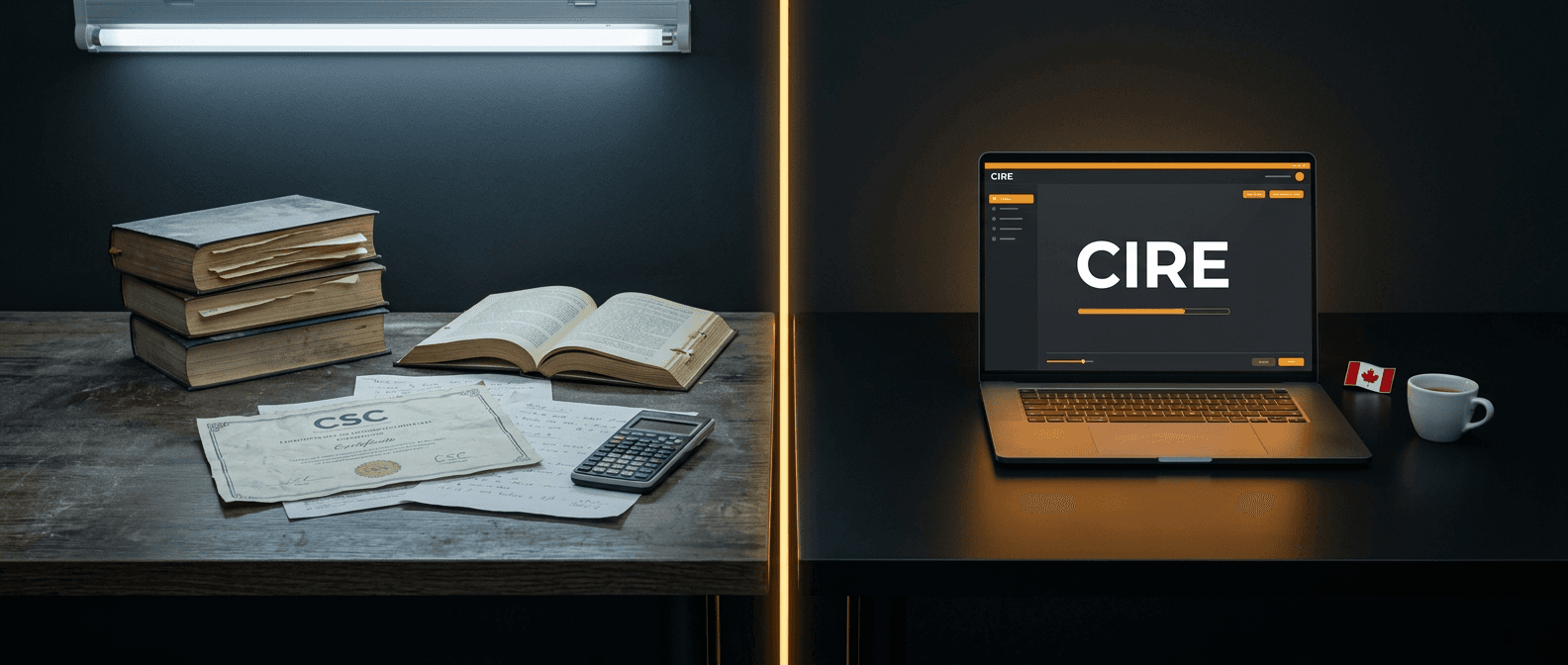
People search for the CIRO course the way they used to enrol in the CSC. Pick a provider, pay, work through the textbook, sit the exam at the end.
That path doesn't exist any more. CIRO's wording on its own exam hub: the proficiency model "does not require preparatory courses." There's no official course, no mandatory enrolment, and no approved-provider list — CIRO says plainly that it "does not provide a list."
Which sounds like a problem until you see what replaced it. The regulator now publishes the exam's blueprint. Free. For every one of the nine exams. That's more than any course provider ever gave you.
The short version: No course exists or is required. Download CIRO's syllabus, Guide for Studying and practice exam for your exam — all free. Use the syllabus for element weights, the practice exam for format rather than readiness. Then spend your time on volume and feedback in your weakest elements. Budget 6 to 8 focused weeks at 10 to 15 hours a week. Don't read the rulebooks.
Step 1: Name your exam before you spend anything
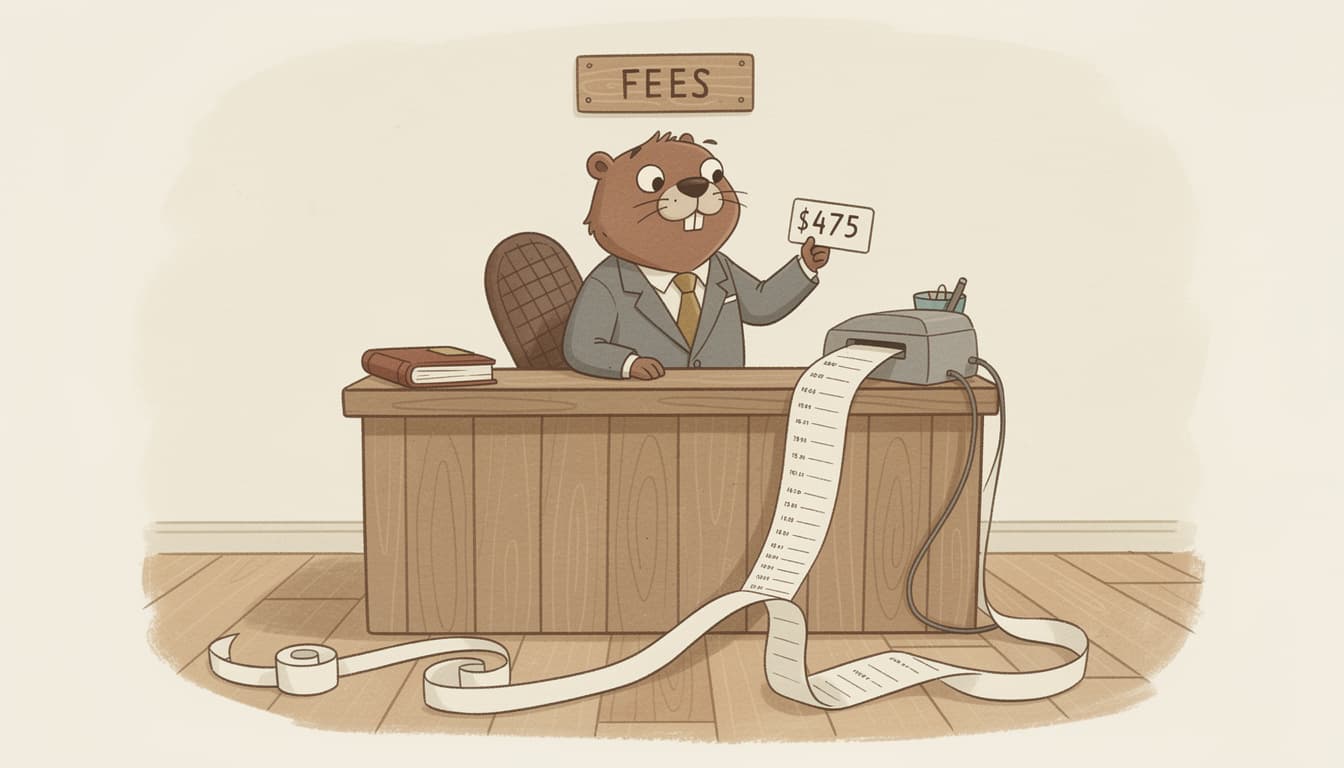
"CIRO exam prep" isn't one thing. There are nine exams with nine different syllabi, and enrolments don't transfer between them — book the wrong one and the $475 is gone.
Your sponsoring dealer confirms the category — it comes attached to the registration they file for you. If you're choosing a direction rather than decoding an offer letter, the full decision map covers all nine.
Step 2: Take the free material, in the right order
CIRO publishes three documents per exam. They do different jobs, and most candidates use them in the wrong order.
| Document | What it's for | When |
|---|---|---|
| Syllabus | The element list and the weights — how many questions each topic carries | First, before anything |
| Practice exam | How CIRO writes a question and frames a scenario | Early, to calibrate format |
| Guide for Studying | Cognitive levels and question structure | Alongside your first week |
The syllabus is the one that matters most and gets read least. It tells you the exam is not evenly distributed, which means your study time shouldn't be either. On the CIRE, three elements carry 49% of the paper. Splitting eight weeks evenly across nine elements means spending half your time on half the marks.
The practice exam is better than people assume — and single-use
CIRO's CIRE practice exam runs to 50 pages. It isn't a token handful of sample questions, and most candidates never open it.
It will show you that CIRO writes in client scenarios rather than definitions, that several options usually look defensible, and that the question is often "what would you do next" rather than "what does the rule say." That's the single most useful calibration available for free.
The catch is single use. You only get to sit it once. Work through it properly and you've seen the answers, so it can't measure you a second time. Use it early, while it's still an honest test, and don't read one paper's score as your readiness. One sitting is a data point.
What actually predicts whether you pass
We looked at 14,114 real practice answers from CIRE candidates, and the result was not what the prep industry says.
| Accuracy | |
|---|---|
| Questions tagged Easy | 63.7% |
| Questions tagged Hard | 63.1% |
A 0.6-point gap. The difficulty label barely predicts anything.
What does predict it is which element you're weak in — and the weak one isn't the scary one.
| Element | Practice accuracy |
|---|---|
| KYC & Suitability — the one every guide calls hardest | 79.3% |
| Overall average | 64.2% |
| Securities & Products — the heaviest element, 19.1% | 62.7% |
| Derivatives | 56.0% |
| Regulatory Framework — the one everyone files under "background" | 51.9% |
Read that top row again. The element candidates fear most is the one they're best at, by fifteen points, because fear makes them drill it and drilling works. The element nobody worries about sits dead last, with people getting nearly half of it wrong.
So "study harder" is the wrong instruction. Until something has scored you element by element, you're guessing which weeks matter. The full analysis is here.
The mistake that costs the most weeks
Reading the source material.
CIRO publishes the regulatory documents the exams draw from — the IDPC Rules, UMIR, the PCMLTFA, the Bank Act. Together they run to more than 700 pages. Candidates treat them like a textbook because that's what the CSC trained them to do.
It doesn't transfer. These exams test applied judgement inside a client scenario. Knowing what Rule 3301 says is no help at all when you're looking at four options that all appear to comply with Rule 3301. The skill being tested is choosing between defensible answers, and you only build that by getting questions wrong and finding out why.
One thing to check before you enrol
You can't take a CIRO exam out of general interest. When you enrol you attest that you either:
- work at a CIRO Dealer Member in a role where these competencies are required, or
- plan to apply to one within the next 12 months, or
- are taking this exam as a prerequisite for another CIRO exam
Education providers are explicitly not eligible. You must be the age of majority where you live, and CIRO reserves the right to ask for evidence, with its decision final. Worth reading before you pay, because the fee is non-refundable in almost every circumstance.
A plan that fits around a job
Weeks 1–2 — find out where you stand. Read the syllabus and note the weights. Sit the free practice exam for format. Then get scored element by element so you know which four elements deserve the next month.
Weeks 3–6 — volume where you're weak. Practice questions in your bottom elements, and read the explanation on every one you get wrong. Weight your hours the way the exam weights its questions.
Weeks 7–8 — full-length under time. The CIRE gives you 110 questions in 120 minutes, about 65 seconds each. Pacing is its own skill and the only way to build it is full papers against a clock.
At 10 to 15 hours a week, that's 6 to 8 weeks. Our week-by-week CIRE plan goes deeper, and there are equivalents for the RSE and ISE.
Where paid prep earns its place — and where it doesn't
Be honest about the gap. CIRO gives you the blueprint and one short practice exam. What it doesn't give you is volume or feedback, and those are the two things that move an element score.
So the real question is narrower than "should I buy a course". It's whether you need more questions than the free material holds, and whether you'd rather find your weak elements now than on exam day.
That's the whole of what we built. EnCiro's CIRE prep is 12,000+ exam-style questions with an explanation on every answer, tracked element by element against CIRO's published weights, with a narrated audio episode for each concept. There's an RSE and an ISE version. There's a free tier, and the diagnostic below needs no account at all.
If the free syllabus and a hundred good questions get you there, use those. The exam fee is fixed at $475, so the only variable you control is how likely you are to pay it once.
Start here
- Download CIRO's syllabus for your exam from the exam hub. Free, and it's the only document written by the people who write the exam.
- Get scored before you plan. The free readiness check is 25 blueprint-weighted questions, about 15 minutes, no account — CIRE, RSE, ISE. It tells you which elements to spend the next month on.
- Know what it costs before you book, including the three charges that aren't the $475 — the full fee breakdown.
FAQ
Is there an official CIRO course?
No. CIRO's own words are that the proficiency model "does not require preparatory courses." There is no official course, no mandatory enrolment, and no approved-provider list — CIRO states plainly that it does not maintain one. What the regulator does publish, free, is a syllabus, a Guide for Studying and a practice exam for every one of the nine exams.
How do I prepare for a CIRO exam?
Start with CIRO's free syllabus for your specific exam, because it carries the element weights that tell you where the questions actually are. Sit the free practice exam early to learn the question format rather than to measure readiness. Then spend your time on volume and feedback in your weakest elements. Most candidates need 6 to 8 focused weeks at 10 to 15 hours a week alongside a full-time job.
Does CIRO provide practice exams?
Yes, one per exam, free from the exam hub, and they are substantial — the CIRE practice exam runs to 50 pages. Sit it early, because it is the best free calibration there is for how CIRO frames a scenario. Its one limit is that you can only take it once honestly: after you have worked through it you have seen the answers, so treat your score as a single data point rather than a readiness verdict.
Which CIRO exam should I prepare for?
It follows from your role. Everyone starts with the CIRE. Executing client orders with no advice means the CIRE alone. Advising retail clients adds the RSE. Servicing institutional clients adds the ISE. Dealing in derivatives adds the Derivatives Exam. Enrolments don't transfer between exams, so confirm the category with your sponsoring dealer before you pay.
How long does it take to study for a CIRO exam?
Roughly 6 to 8 focused weeks for the CIRE, at 10 to 15 hours a week while working. The number moves a lot depending on which elements you're weak in, which is why a scored diagnostic before you start is worth more than an extra week of reading.
Can anyone enrol in a CIRO exam?
No. When you enrol you must attest that you either work at a CIRO Dealer Member in a role needing those competencies, plan to apply to one within 12 months, or are taking the exam as a prerequisite for another CIRO exam. Education providers are explicitly not eligible. You must also be the age of majority where you live, and CIRO can ask for evidence.
Is the hardest CIRE element the one everyone warns about?
No. Across 14,114 real practice answers, KYC & Suitability — the element every guide calls hardest — has the highest accuracy in the bank at 79.3%, against an overall average of 64.2%. The lowest is Regulatory Framework at 51.9%, the element most candidates file under background reading. Fear makes people drill the scary element until it becomes their strongest, and leaves the quiet one unstudied.
Do I need to read CIRO's rulebooks?
No, and trying is the most expensive mistake in CIRO prep. The source material — the IDPC Rules, UMIR, the PCMLTFA, the Bank Act — runs to more than 700 pages. The exams test applied judgement in client scenarios, so knowing what a rule says doesn't help when four answer options all appear to comply with it.
Sources
- CIRO — Exam Hub — "does not require preparatory courses", "we do not provide a list", and the free syllabus, Guide for Studying and practice exam for all nine exams (accessed October 2026)
- Fitch Learning — Exam Enrolment and Attempts Policy (v1, January 2026) — the enrolment attestation, eligibility conditions, and non-transferability between exams
- EnCiro — Is the CIRE Hard? — the 14,114-answer analysis behind the element accuracy figures
- CIRO — Dealer Member Rules and UMIR — the source material the exams draw from