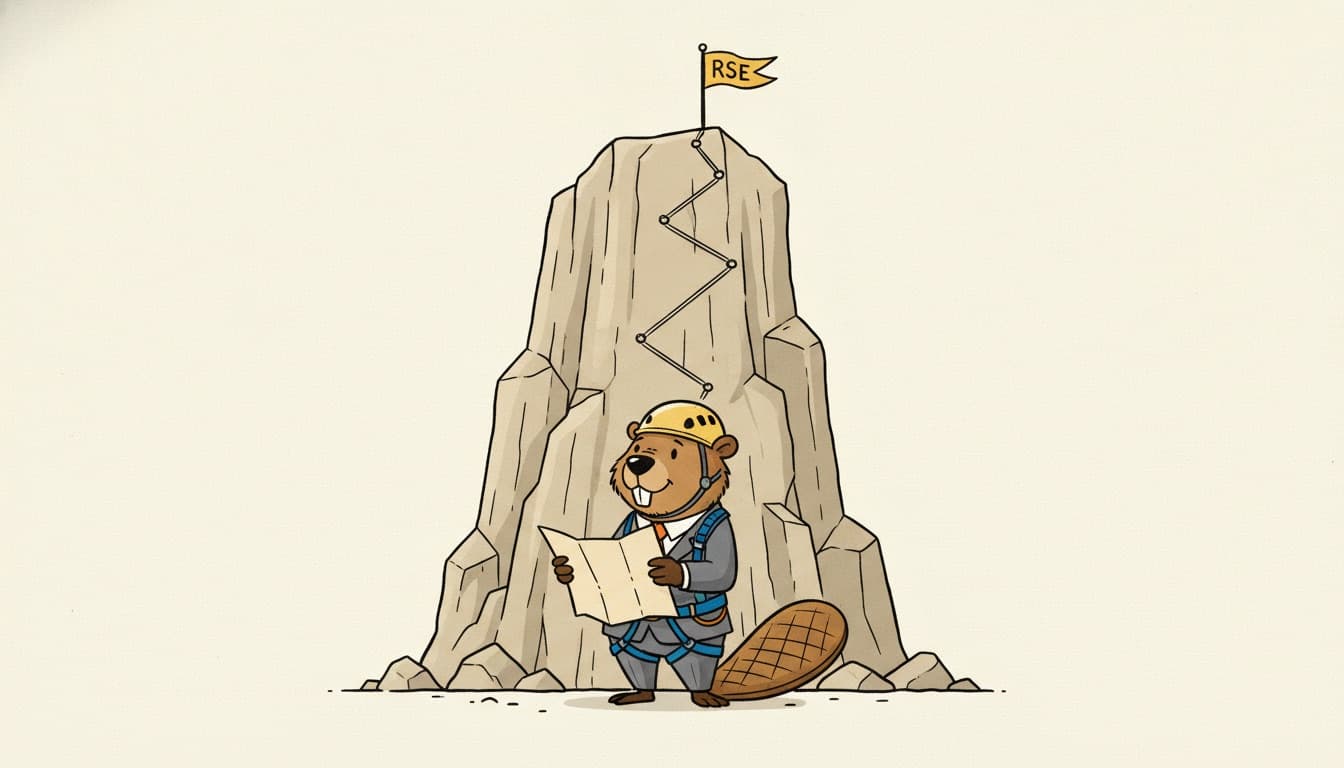
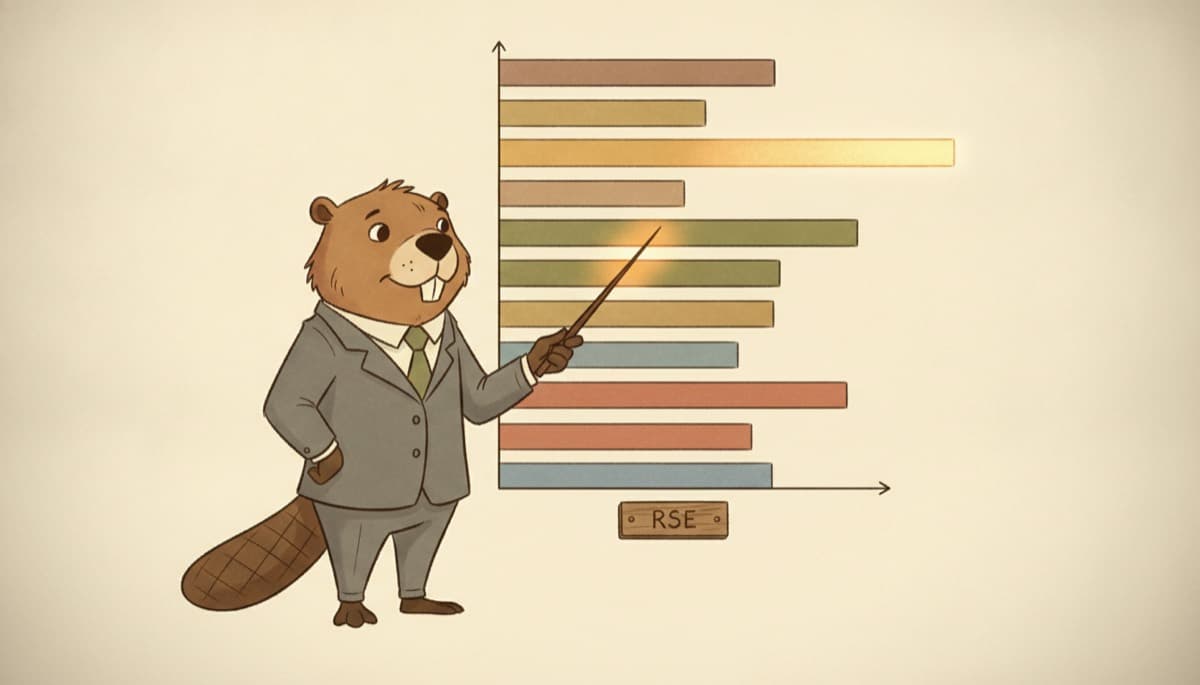
Open the RSE syllabus and nine elements stare back at you. Fixed income. Equities. Securities analysis. Portfolio construction. It reads like a product catalogue, and most people study it like one — a week per asset class, working down the list.
Then the exam hands you a client who just lost her job and is parked in small-cap equities, and asks what you do about it.
KYC & Suitability
Managed Products
Securities Analysis
Investment Recommendations
Portfolio Construction
Equities
Fixed Income
Execution & Market Integrity
Monitoring & Reporting
40% of your exam — KYC and suitability, investment recommendations, and monitoring carry 48 of 120 questions. One client, start to finish
The RSE Weighting, in Full
| Element | Topic | Questions | Weight |
|---|---|---|---|
| 1 | Know-Your-Client and suitability | 27 | 22.5% |
| 2 | Fixed income | 10 | 8.3% |
| 3 | Equities | 12 | 10.0% |
| 4 | Securities analysis | 14 | 11.7% |
| 5 | Managed products and other investments | 16 | 13.3% |
| 6 | Portfolio construction | 13 | 10.8% |
| 7 | Investment recommendations | 14 | 11.7% |
| 8 | Execution and market integrity | 7 | 5.8% |
| 9 | Monitoring, reporting and maintaining client relations | 7 | 5.8% |
Weights are CIRO's own, published to the question in the official syllabus.
The Three Elements That Are One Element
Look at 1, 7 and 9 again. Know-Your-Client and suitability. Investment recommendations. Monitoring, reporting and maintaining client relations.
Those three are one client at three points in time: the day you open her account, the day you tell her what to buy, and the day a year later when you check whether it still fits.
Twenty-seven questions, plus fourteen, plus seven. Forty-eight of 120. Forty per cent of the paper, about one person.
Study them in the same fortnight and they reinforce each other, because the material genuinely is continuous — a suitability determination in Element 1 is the thing a recommendation in Element 7 has to satisfy, and the trigger that forces a review in Element 9 is a change to the KYC you collected in Element 1. Study them in weeks 1, 5 and 8 and you will relearn the same ideas three times under three different headings.
The other six elements — fixed income, equities, securities analysis, managed products, portfolio construction, and execution and market integrity — are the remaining 72 questions. That is what you are advising on, and how the trade gets done. Necessary. Not the spine.
The Element Nobody Budgets For
Element 1 is 27 questions. The next biggest is 16.
That ratio is where RSE study plans go wrong, and it goes wrong in a specific direction: candidates arrive from a product-heavy background, see "Know-Your-Client" at the top of the syllabus, read it as the warm-up, and spend their first week there before moving on to the real material.
Element 1 is the real material. A quarter of the paper, and there is no shallow end to it — 27 questions drawn from 27 learning outcomes. One question per outcome, exactly. Trusted contact persons, temporary holds, the distinction between account appropriateness and the suitability determination, information barriers, outside activities, personal financial dealings, the three legs of a risk profile. Every one of those is realistically in play on every sitting, because there is nothing else for those 27 questions to be about.
And it is not recall. Eleven of its outcomes are tagged Apply and four Analyze — fifteen of twenty-seven ask you to do something with the rule rather than state it.
What the Cognitive Tags Tell You
Every outcome in the syllabus carries a tag: Remember, Understand, Apply or Analyze. It is CIRO telling you, in advance, what it is allowed to demand. We tallied all 109:
- Remember: 1 outcome. One. It is 1.5 — document client discussions accurately.
- Understand: 43 outcomes.
- Apply: 41 outcomes.
- Analyze: 24 outcomes.
Sixty-five of 109 sit at Apply or Analyze. The CIRE has 2 Apply-level outcomes across its 99.
That single comparison is most of what people mean when they say the RSE "feels different". The exam that got you here rewarded organised recall. This one gives you a client, a situation and four defensible-sounding options, and grades your judgment. Flashcards built the CIRE. They will not build this.
One more thing the tags are: a floor, not a ceiling. Levels are cumulative, so an Apply-tagged outcome can still be asked at Understand. The reverse never happens — you cannot answer an Apply question with Remember-level preparation.
Which Elements Are Predictable, and Which Aren't
The weight tells you how many questions an element is worth. The syllabus also tells you how many outcomes it contains — and dividing one by the other tells you something the weight alone can't.
| Element | Questions | Outcomes | Questions per outcome |
|---|---|---|---|
| 9 — Monitoring and reporting | 7 | 5 | 1.40 |
| 3 — Equities | 12 | 10 | 1.20 |
| 7 — Investment recommendations | 14 | 12 | 1.17 |
| 8 — Execution and market integrity | 7 | 6 | 1.17 |
| 5 — Managed products | 16 | 14 | 1.14 |
| 2 — Fixed income | 10 | 9 | 1.11 |
| 6 — Portfolio construction | 13 | 12 | 1.08 |
| 1 — KYC and suitability | 27 | 27 | 1.00 |
| 4 — Securities analysis | 14 | 14 | 1.00 |
The higher the number, the more often the exam has to return to the same outcome — which means the more reliably your preparation on it converts into marks.
Element 9 is the best-value block on the paper. Seven questions from five outcomes, and all five are tagged Apply or Analyze, the only element on the RSE where that is true. It is also the one most likely to be skimmed, because it sits last and it is small. Clear it in week two. It costs an evening and it pays like an element twice its size.
At the other end, Element 4 and Element 1 are at 1.00 — one question per outcome. No outcome gets a second chance to be asked, so every outcome is worth knowing and none is worth over-polishing.
The Calculations
They are finite, they are listed, and they are all-or-nothing — a calculation question gives no partial credit for understanding the method and fumbling the arithmetic.
- Element 2: bond yields, modified duration
- Element 4: financial ratios. The syllabus summary says candidates "may be required to calculate various accounting ratios"
- Element 5: fund returns, net asset value per share. The summary names calculating "the value of a portfolio or the units/shares being issued"
- Element 6: the capital asset pricing model, named in the summary; the Sharpe, Treynor and Jensen measures
- Across the paper: time value of money in several costumes — bond present value, equity discounted cash flow, goal funding, annuities — plus capital gains and dividend tax
Drill them on the tool you will actually be handed. CIRO exams are sat in Prometric ProProctor with an on-screen basic or scientific calculator. No personal calculators, and no time-value-of-money keys. If you rehearse on a financial calculator you are rehearsing with equipment that will not be in the room.
How to Read This Syllabus in an Evening
- Mark the arc. Elements 1, 7 and 9. Forty per cent, one client. Block them together.
- Give Element 1 the hours its weight earns, not the hours its position suggests.
- Bank Element 9 early. Smallest element, most predictable, pure Apply.
- Pull the calculation list out into its own page and drill it twice a week from week two until it is boring.
- Read the five product elements for what a client would ask, not for what a textbook would say. The exam asks you to advise, not to define.
Where to Go Next
The honest first step is finding out what you already know. The free RSE readiness check is 25 questions weighted to this exact blueprint, scored element by element, about fifteen minutes, no signup. It tells you which of these nine elements is actually your problem, which is rarely the one you assumed.
Then: what the RSE is and who needs it, how hard it really is, and a weights-first six-week plan. Every element has its own page with the full outcome list, what it tests and a real question — start at the RSE elements guide.
Full prep is at EnCiro RSE: 8,900+ scenario questions with an explanation on every option, an audio episode for every concept, and custom mocks you can aim at a single element.
FAQ
How many elements are on the RSE?
Nine. Know-Your-Client and suitability (27 questions), fixed income (10), equities (12), securities analysis (14), managed products and other investments (16), portfolio construction (13), investment recommendations (14), execution and market integrity (7), and monitoring, reporting and maintaining client relations (7). They total 120 questions in 180 minutes.
What is the biggest element on the RSE?
Element 1, Know-Your-Client and suitability, at 27 of the 120 questions — 22.5%, nearly a quarter of the paper. It is almost twice the size of the next-largest element and bigger than Elements 8 and 9 combined, which is the opposite of what candidates arriving from a product-heavy course expect.
Which RSE elements matter most?
Elements 1, 7 and 9 — Know-Your-Client and suitability, investment recommendations, and monitoring and reporting. They carry 48 of the 120 questions between them, 40% of the exam, and they are the same client at three points in time: opening the account, advising on it, and reviewing it. Studied as one arc instead of three topics, they stop competing for your hours.
How many learning outcomes does the RSE syllabus have?
109, spread across the nine elements. One is tagged Remember, 43 Understand, 41 Apply and 24 Analyze — so 65 of 109 require you to use the material in a scenario rather than recall it. The CIRE, by contrast, has 2 Apply-level outcomes across its 99.
Does the RSE include calculations?
Yes, and the list is finite. Bond yields and modified duration, time value of money in several forms, financial ratios, fund returns and NAVPS, the capital asset pricing model, the Sharpe, Treynor and Jensen measures, and capital gains and dividend tax. Element 4's syllabus summary says candidates may be required to calculate various accounting ratios; Element 6's names the capital asset pricing model directly. You sit the exam with an on-screen basic or scientific calculator, with no time-value-of-money keys.
Where is the RSE syllabus published?
On CIRO's exam hub, free, alongside the study guide and a practice exam. The syllabus is the document that governs what the exam may ask and at what cognitive level, so it is worth reading end to end before you spend money on anything else.
How should I split study time across the RSE elements?
Close to the published weights, with one adjustment at each end. Element 1 is 27 questions drawn from 27 outcomes — one question per outcome, so nothing in it is safely skippable. Element 9 is the opposite: 7 questions from only 5 outcomes, the most predictable block on the paper, and worth clearing early because it is cheap.
Sources
- CIRO — Retail Securities Exam — the official syllabus (element weightings, all 109 learning outcomes and their cognitive levels), the study guide, and the practice exam
- CIRO — Proficiency for New Candidates — which approvals require the RSE, enrolment and fees
- CIRO Retail Securities Syllabus, 8 May 2025 edition — element weights and outcome counts in this article are tallied from that document
- Fitch Learning — Can I use a physical calculator during the exam? — Fitch administers CIRO's exams. "Personal calculators are not permitted under any circumstances", and the article's own screenshot of the ProProctor calculator shows Basic and Scientific modes with no N, I/Y, PV, PMT or FV keys. CIRO's syllabi say nothing about calculators